
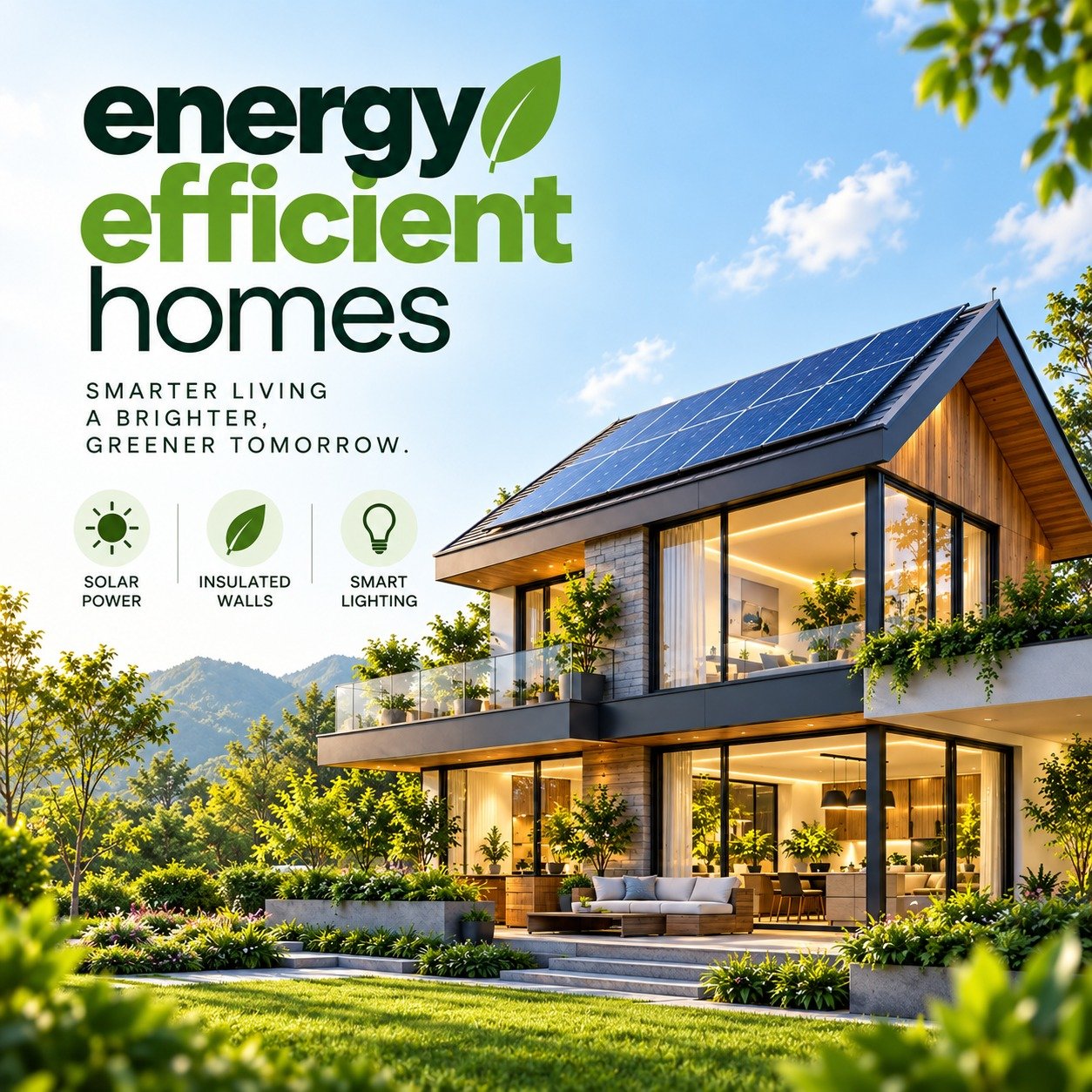

Do you want lower power bills? Do you want a home that stays cool in summer and warm in winter? Then energy efficient homes are for you.
An energy efficient home uses less power to do the same job. Your lights, fans, and heater work less. Your bill goes down, and your home feels better.
In this guide, you will learn how to design energy-efficient homes step by step. You will also see how to pick good energy efficient home builders. We will look at energy efficient home plans and energy efficient home designs too.
Do not worry if English is hard for you. We use short words and clear steps. Let us begin!
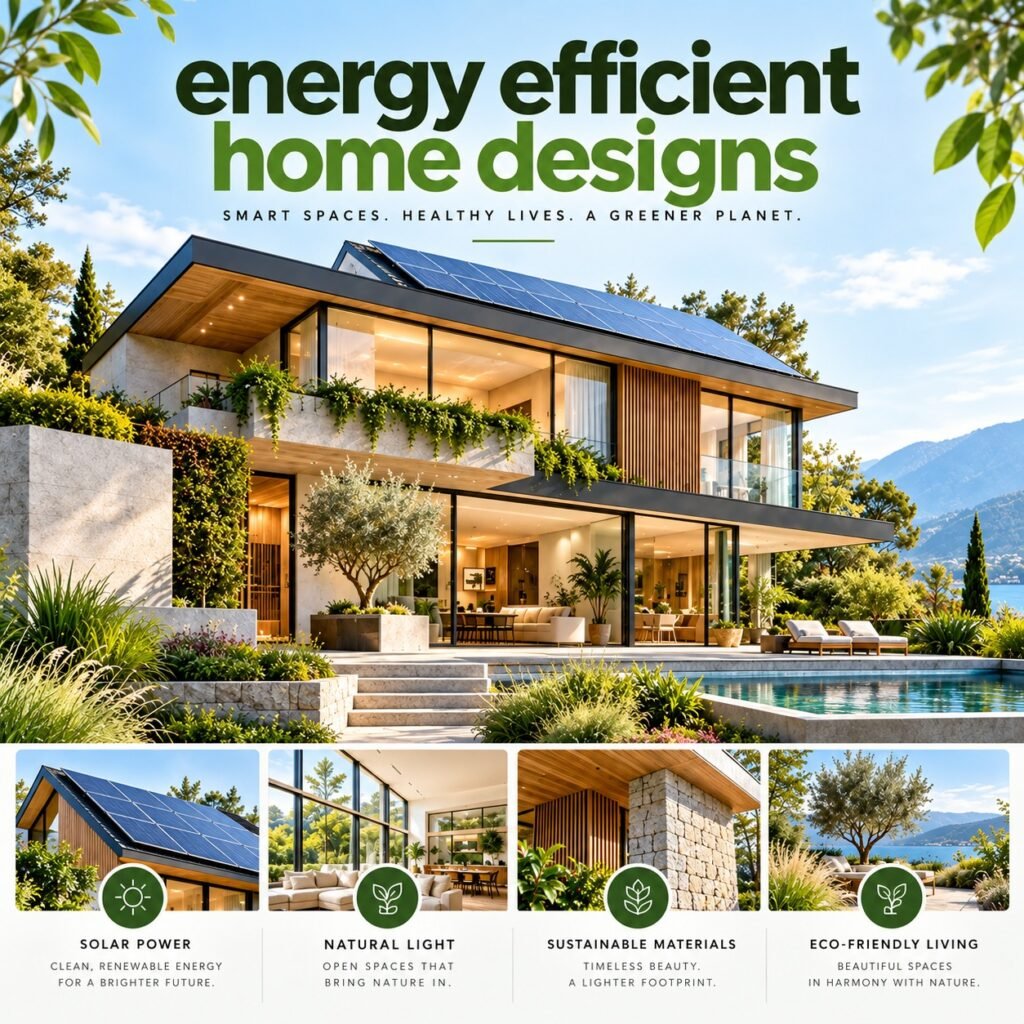
Table of Contents
Energy Efficient Homes: What Are They?
Let us start with the basics. Energy efficient homes are houses built to waste less power. They keep heat out in summer. They keep heat in during winter.
Think of a water bottle with a small hole. Water leaks out all day. A home with gaps and weak walls leaks cool or warm air in the same way. An efficient home fixes the holes.
A Simple Meaning
An energy efficient home needs less power for cooling, heating, light, and hot water. It does this with smart walls, good windows, and a clever layout. It may also use solar power.
The goal is easy. Get the same comfort, but use less energy. That is all.
How Is It Different From a Normal Home?
A normal home often loses a lot of air through the roof, walls, and windows. So the fan or AC runs all day. Energy efficient homes use less power because they keep the air inside.
Here is a quick look:
- Normal home: more leaks, more heat, higher bills.
- Efficient home: fewer leaks, steady air, lower bills.
Good energy efficient home designs also use sunlight and wind to help. That means less work for machines.
Why Energy Efficient Homes Are Worth It
Many people think a green home costs too much. But the full story is different. Good energy efficient homes often cost less to live in over time.
Let us look at the main gains.
Lower Power Bills
You use less power, so you pay less. This saving happens every month. Over ten years, it adds up to a lot.
Better Comfort
Your rooms stay at an even heat. There are no hot spots or cold corners. You also hear less noise from outside.
Cleaner Air
Less power use means less smoke from power plants. Good air flow also keeps your rooms fresh. That helps your family breathe well.
Higher Home Value
Buyers love low bills. A home with a smart plan is easier to sell. It may also sell for more.
Strong and Long Lasting
Tight walls and good roofs keep out water and bugs. So your house stays in good shape for longer. Repairs cost less.
How to Design Energy-Efficient Homes: Start With These Basics
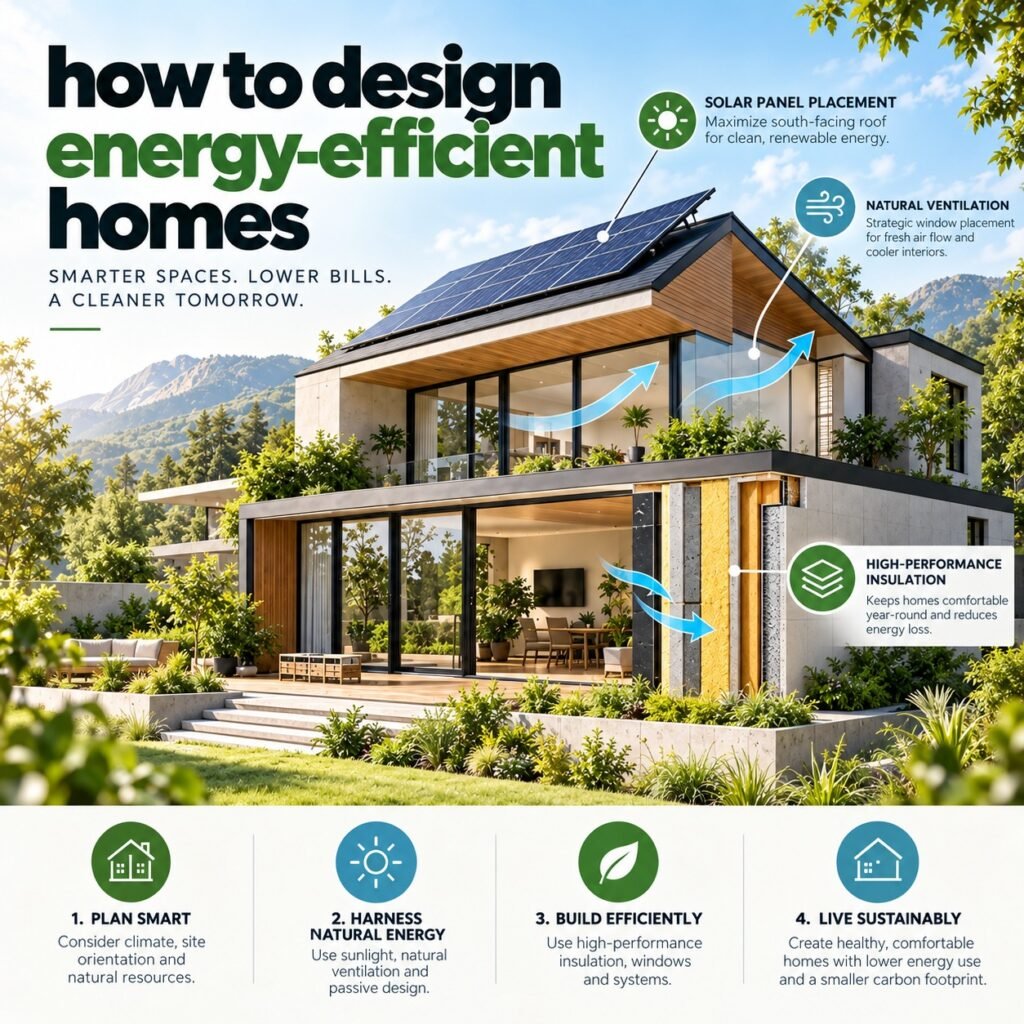
Now the big question: where do you start? Start with the plan, not the paint. Good choices at the start save the most money.
Changing things later is hard and costly. So think first. Then build.
Step 1: Know Your Land and Sun
Look at where the sun rises and sets. In a hot place, you want less sun on your walls. In a cold place, you want more sun in winter.
Also check the wind. Wind can cool your home for free. Place windows so fresh air can pass through.
Step 2: Keep the Shape Simple
A simple box shape loses less heat than a shape with many corners. Fewer corners mean fewer weak spots. Simple is smart.
Step 3: Place Rooms With Care
Where you put each room matters. In hot places, put rooms you use a lot on the cooler side. Keep the kitchen away from bedrooms, because cooking makes heat.
Step 4: Use Shade
Roof edges, trees, and porches block the hot sun. Shade can drop the room heat by a lot. This is a cheap trick that works well.
Step 5: Plan for Air Flow
Place windows on two sides of a room. Air enters from one side and leaves from the other. This is called cross air flow, and it cools your rooms with no power.
These five steps are the core of a smart plan. Follow them, and your home is already ahead.
Walls, Roof, and Floor: Keep the Air Inside
Walls, roof, and floor are the skin of your home. If the skin is weak, air leaks out. Strong energy efficient homes have a tight, strong skin.
What Is Insulation?
Insulation is a soft layer inside walls and roofs. It slows heat from moving in or out. Think of a warm jacket in winter. Your house needs a jacket too.
Where to Put Insulation
- The roof, because much heat enters from the top.
- The outer walls.
- The floor, if it sits above open air.
- Hot water pipes.
Pick the Right Material
Different places need different things. Foam, glass wool, and natural fibers like cork are common. Ask a local expert which one fits your weather.
Choose a Cool Roof
A light-colored roof bounces back sunlight. A dark roof soaks it up. In hot places, a light roof can keep your top floor much cooler.
Many good energy efficient home designs use light roofs, thick walls, and a wide roof edge for shade.
Windows and Doors: Small Parts, Big Effect
Windows can lose a lot of heat. They can also let in too much sun. In energy efficient homes, every window is placed with care.
Pick Good Glass
Double glass has two layers with air between them. It blocks heat better than single glass. It also cuts noise.
Size and Place Matter
Big windows on the sunny side bring heat in. In hot places, keep them small or shaded. In cold places, big windows that face the sun help in winter.
Seal the Gaps
Even good windows leak if gaps remain. Use rubber strips around windows and doors. It is cheap and quick. Many energy efficient home builders do this as a first step.
Do Not Forget Doors
An outer door should fit tight. Gaps at the bottom let air slip out. A small door strip fixes it in minutes.
Heating, Cooling, and Air Flow
Heating and cooling use the most power in a home. So this part gives the biggest saving. The best energy efficient homes focus here first.
Choose Efficient Machines
Look for a star label or energy rating on your AC, heater, or fan. More stars mean less power use. A good machine costs more now, but it saves money later.
Use Fans Smartly
A ceiling fan uses far less power than an AC. Use a fan first. Turn on the AC only when you must.
Raise the AC setting by one or two degrees. You will feel almost no change, but you will save power.
Let the Home Breathe
A tight home still needs fresh air. Small vents let stale air out and fresh air in. This keeps your home healthy. Good energy efficient homes balance both.
Use Smart Controls
A timer or smart plug turns machines off when you do not need them. You can set the AC to stop at night. Small habits make big savings.
Energy Efficient Home Plans: What to Look For
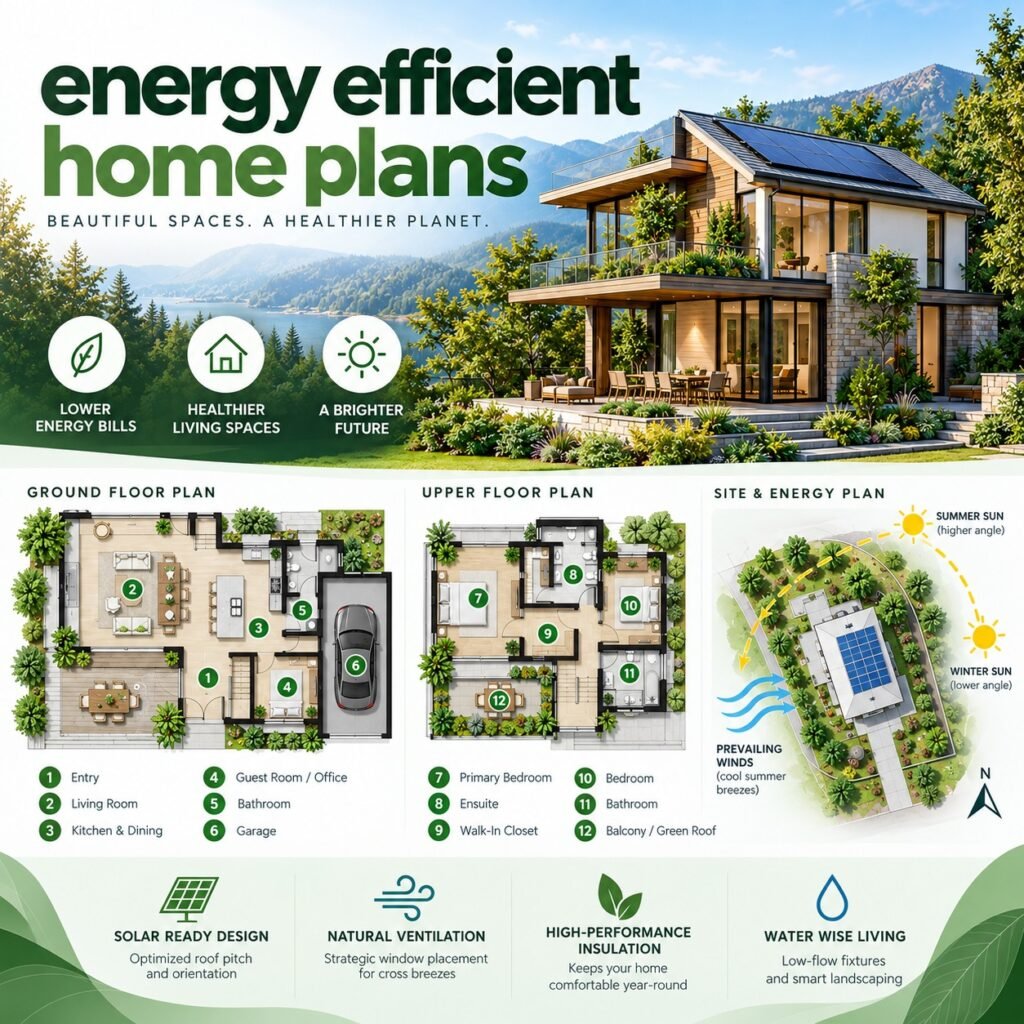
A plan is a drawing of your home. It shows rooms, doors, and windows. Good energy efficient home plans save power before you build a single wall.
Learning how to design energy-efficient homes gets easier when you start with a strong plan.
Features of a Good Plan
- Rooms placed to catch sunlight and wind.
- Windows on two sides of key rooms.
- A simple shape with few corners.
- Shade over the sunny walls.
- Space for solar panels on the roof.
Small Plans Can Be Smart
A small home uses less power. It needs less cooling and less light. You do not need a big house to be happy. Small energy efficient homes can feel open and nice.
Ask for a Check Before Building
Some experts can test your plan on a computer. They show where heat may leak. Ask for this. It is easy to fix a drawing, but hard to fix a wall.
You can also browse energy efficient home designs online for ideas. Always check that the style fits your weather. Even great energy efficient homes fail if they do not match the local climate.
Energy Efficient Home Designs That Work in Real Life
There are many styles. Each one uses nature to help you. Here are some simple ideas.
Passive Homes
Passive homes use sun, shade, and air flow instead of machines. They are very tight and well covered with insulation. They need very little power.
Courtyard Homes
An open yard in the middle brings light and air to all rooms. Old homes in many warm places use this idea. It is cheap and smart.
Earth-Sheltered Homes
Part of the home sits below or beside the ground. The earth keeps a steady heat. It works well in very hot or very cold places.
Small Modern Homes
Think of a small box with shaded windows, a light roof, and solar panels. It is easy to build and easy to cool.
Which style is best? It depends on your land and your weather. Many energy efficient home designs mix ideas from more than one style. Pick what suits your life.
How to Choose Energy Efficient Home Builders
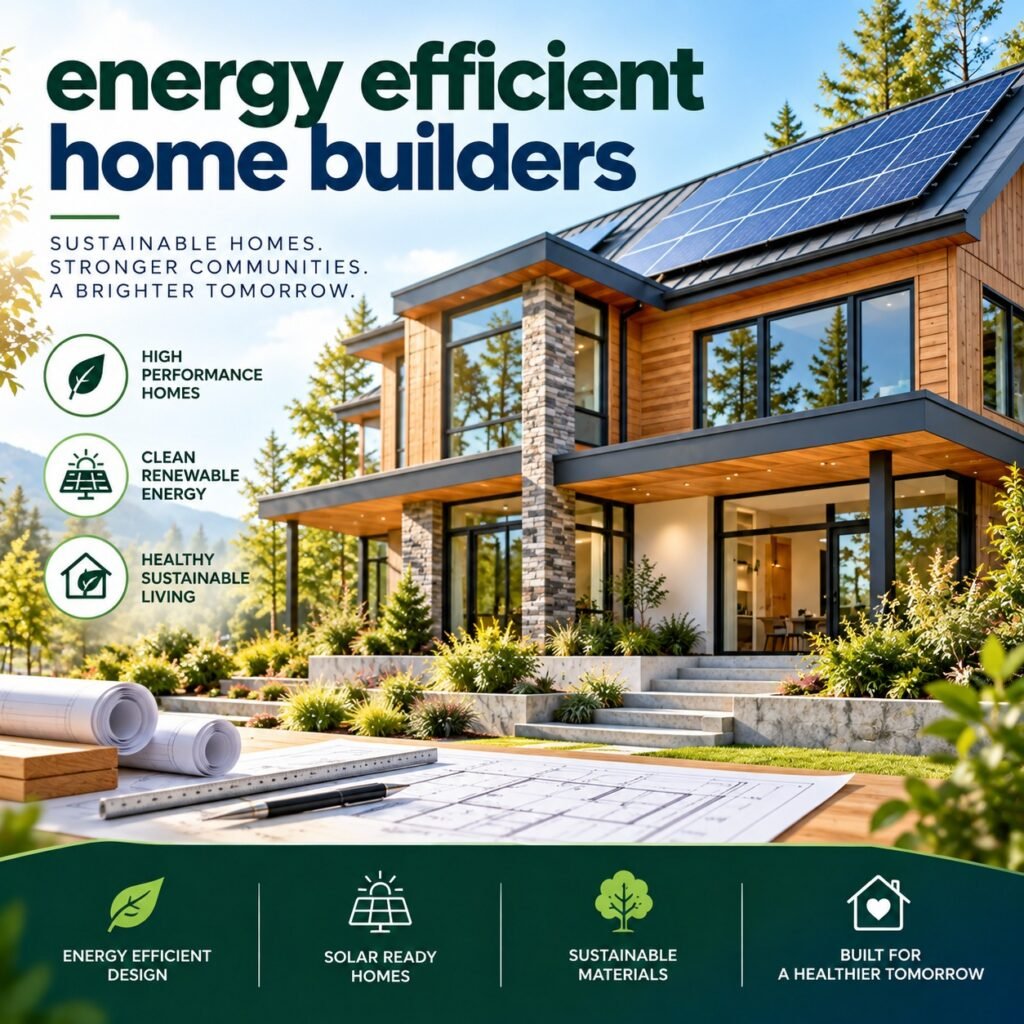
A good plan needs a good builder. A weak builder can ruin a great plan. So choose with care.
The right energy efficient home builders know the small tricks that stop leaks. They also know which materials last in your area.
Questions to Ask
- Have you built energy efficient homes before?
- Can I see photos or visit a finished home?
- Which insulation and windows do you use?
- Do you test for air leaks at the end?
- Can I talk to a past client?
Check Proof
Ask for papers, past work, and reviews. A good builder is happy to show proof. If they hide things, walk away.
Compare Prices
Get at least three prices. Do not choose only the lowest one. Cheap work with leaks costs more later. Compare the materials too.
Agree on Everything in Writing
Write down the plan, the materials, the price, and the end date. This protects both sides. It also stops fights later.
Smart Lights, Water, and Appliances
The home shell is key, but the inside counts too. Small choices add up.
Use LED Lights
LED bulbs use much less power than old bulbs. They also last longer. Use daylight too. Big windows and light paint colors make rooms bright without any bulb.
Save Hot Water
Hot water takes a lot of energy. A solar water heater is a great fix. Also fix leaking taps and keep showers short.
Pick Star-Rated Appliances
Choose a fridge, washing machine, and fan with high star ratings. A fridge runs all day, so it matters most. Buy the size you really need.
Unplug Idle Devices
Chargers and TVs use small power even when off. Plug them into one switch strip. Turn it off when you leave.
Every small step helps energy efficient homes reach lower bills.
Add Solar Power for Extra Savings
Solar panels make power from sunlight. When your home already uses less power, you need fewer panels. That keeps the setup cost low.
Good plans leave roof space ready for panels. They also keep the roof free from shade. Think about this at the start, not at the end.
Solar works best in sunny places. In cloudy places, you may get less power. A local expert can tell you what to expect.
Cost: Is It Expensive?
Some efficient features cost a little more at first. But the savings come back through lower bills. Many owners get their money back in a few years.
Some places also give help, like tax breaks or low-cost loans. Check the rules in your area. They change often.
Budget Tips
You can start small. Learning how to design energy-efficient homes on a tight budget is about priorities.
- Seal gaps around doors and windows first.
- Spend on the roof and walls next.
- Pick good windows for the sunny side.
- Change to LED lights.
- Add solar later, when you can.
Results depend on your weather, your home size, and how you live. So treat savings numbers as a guide, not a promise.
Common Myths
Let us clear up some wrong ideas.
Myth 1: “It costs too much.”
Not always. Small steps like sealing gaps are cheap. Bigger steps pay back over time.
Myth 2: “It looks plain.”
Not true. Efficient homes can look modern, classic, or cozy. Style and savings can go together.
Myth 3: “Only new homes can be efficient.”
Wrong. You can improve an old home too. Add insulation, seal gaps, and change the bulbs.
Myth 4: “It needs fancy tech.”
No. Many of the best ideas are simple. Shade, air flow, and a tight roof do most of the work.
Frequently Asked Questions (FAQ)
1. What are energy efficient homes?
They are homes built to use less power. They have good insulation, tight windows, smart layouts, and efficient machines. This keeps rooms comfortable and bills low.
2. How to design energy-efficient homes?
Start with the sun and wind on your land. Keep the shape simple, add shade, and plan air flow. Then add good insulation, strong windows, and efficient machines.
3. How do I find energy efficient home builders?
Ask friends, check reviews, and visit finished homes. Get three prices and ask about past work. Pick a builder who has done this kind of job before.
4. Are energy efficient home plans costly?
Not always. A good plan may cost a little more at first. But it often saves much more through lower bills and fewer fixes.
5. Which energy efficient home designs are best?
It depends on your weather and land. Passive, courtyard, and small modern styles all work well. Choose one that fits your climate and budget.
Final Thoughts: Your Next Step Toward a Smarter Home
You now know the big ideas. Plan with the sun and wind in mind. Seal the skin of your house. Choose good windows, machines, and lights.
Pick a builder you trust, and ask many questions. Start with small steps if money is tight. Every step lowers your bill and makes your home more comfortable.
Your home should work for you, not against you. With these tips, you can build a home that saves money and feels great. Take the first step today.
