
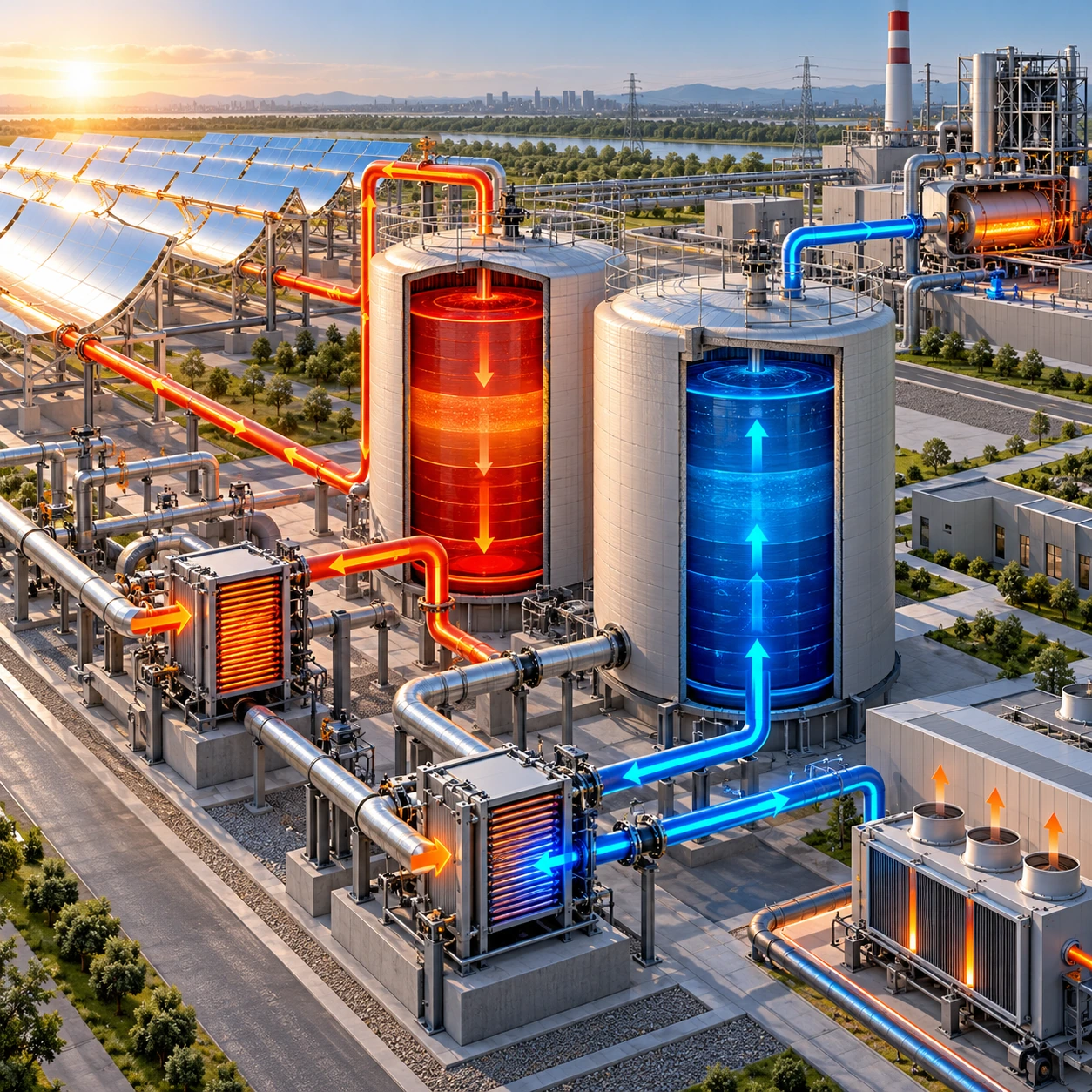

Blog post for nextenergyhub.com | Focus KW: thermal energy storage system | About 3,500 words
Have you ever kept hot tea in a flask for hours? The tea stays warm because the flask holds the heat. A thermal energy storage system works in a similar way, but on a much bigger scale.
It stores heat or cold when power is cheap and clean. Then it gives that heat or cold back when you need it.
In this guide, you will learn how thermal energy storage works. You will see the main types, the gains, and real uses. We will also compare it with electrical energy storage and look at long term energy storage.
We use simple words and short steps. Let us start!
Table of Contents
Thermal Energy Storage System: The Simple Answer
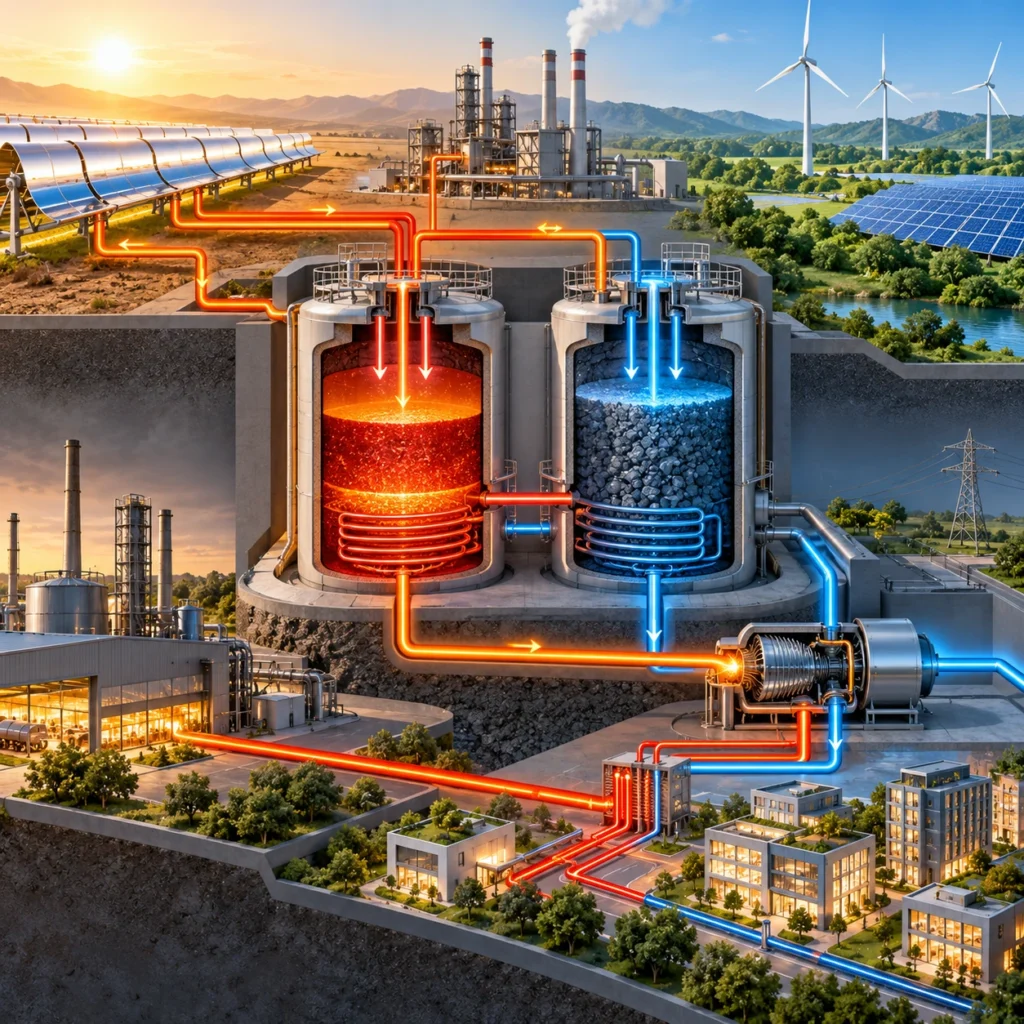
Let us keep it easy. A thermal energy storage system holds heat or cold in a tank, a block, or a pool. You can use it later.
It does not make energy by itself. It only saves energy for the right time. Think of it as a savings box for heat.
What Does It Store?
It can store hot water, ice, hot rocks, hot sand, or special materials that melt and freeze. Each one keeps energy as heat or cold.
Why Store Heat at All?
People need heat in the morning and evening. But clean power, like sunlight, comes at noon. Storage fixes this gap.
So we save the extra at noon and use it in the evening. That is the main idea behind thermal storage.
A Simple Home Example
Many homes already have a small version. A hot water tank heats water when power is cheap. Later, you take a warm shower with no wait.
That tank is a tiny thermal storage system. Large buildings and power plants follow the same plan.
Heat and Cold: A Quick Refresher
Heat is a form of energy. It always moves from hot things to cold things. That is why a hot drink cools down in a cup.
To keep heat in, we need a good wall around it. This wall is called insulation. A thick wall slows the heat from leaving.
Cold Is Stored Too
Cold storage works the other way. You freeze water into ice at night. During the day, the ice cools the air in a building.
So storage can hold cold, not only heat. Both are useful.
How a Thermal Energy Storage System Works
Every storage system has three jobs: charge, store, and discharge. Let us walk through them.
Step 1: Charging
The system takes in extra energy. It may come from the sun, from the grid at night, or from waste heat in a factory. This energy heats or cools the storage material.
Step 2: Storing
The material sits in an insulated tank or space. Good insulation keeps heat or cold from leaking out. Some systems hold it for hours. Some hold it for months.
Step 3: Discharging
When you need the energy, the system gives it back. Hot water flows through pipes, or cold air blows through a vent. The heat can turn water into steam. The steam moves a machine that creates electricity.
What Is the Storage Material?
It can be water, ice, rock, sand, concrete, salt, or oil. Each material has its own strengths. Water is cheap and safe. Salt can hold very high heat.
Why Insulation Matters
A leaky tank wastes energy. So designers use thick, strong insulation. This keeps thermal energy storage costs lower over time.
What Can Charge the Storage?
Storage needs an energy source to fill it. Here are the common ones.
Solar Power
Sunlight can heat water or salt straight away. Solar panels can also power a heater.
Cheap Night Power
Many places charge less for power at night. Storage soaks it up then and gives it back by day.
Wind Power
Wind often blows strong at night. Extra wind power can heat a tank or freeze ice.
Waste Heat
Much of the heat from factories is never put to use. Storage can catch it and use it later.
Types of Thermal Energy Storage
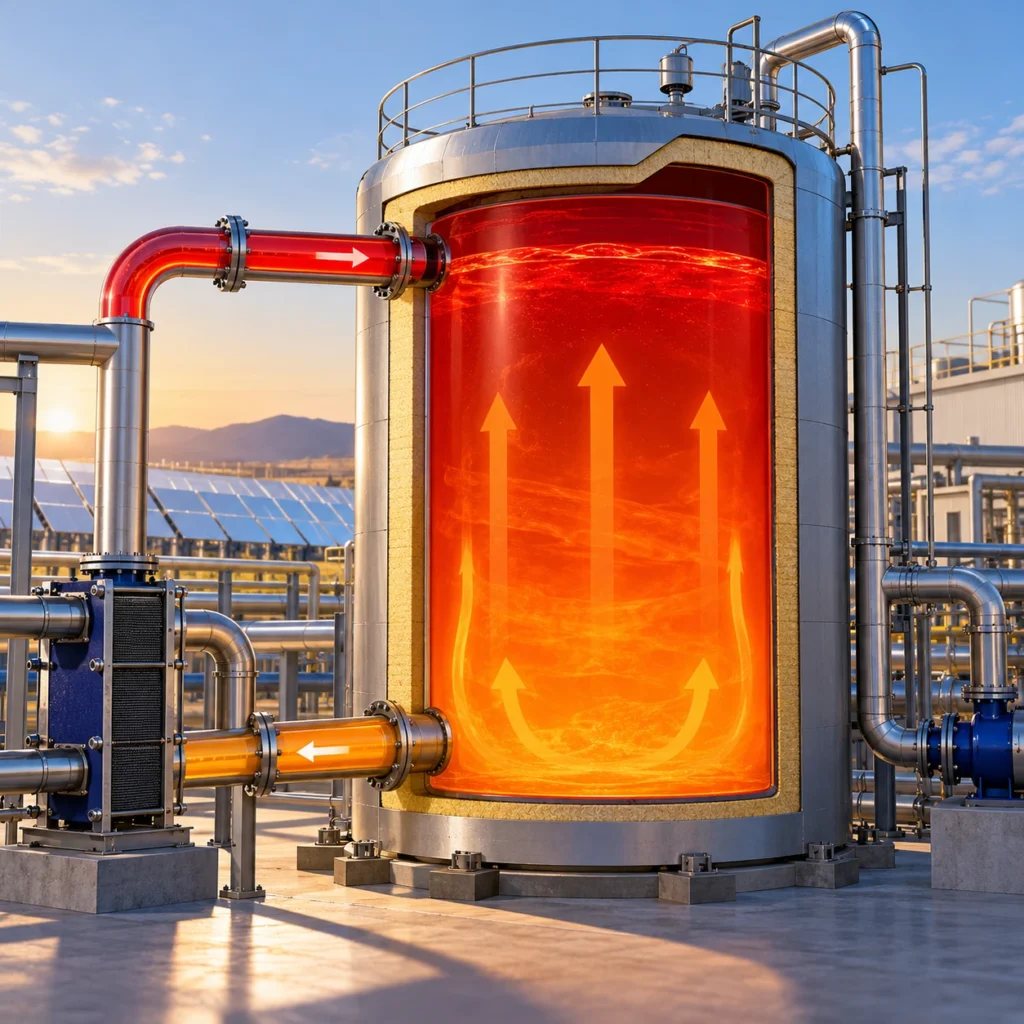
Thermal storage comes in three main types. Each one holds energy in a different way.
Type 1: Heat Held in a Material
This is the simplest type. You heat a material like water, rock, sand, or concrete. The hotter it gets, the more energy it holds.
A hot water tank is the best known example. It is cheap, safe, and easy to build.
In big solar plants, very hot liquid salt is used. It can reach over 500 degrees Celsius. So the plant can keep working once the sun goes down.
Type 2: Melt and Freeze Storage
Some materials take in lots of energy when they melt. They give it back when they freeze again. Ice is a good example.
Special waxes and salts do the same job. The name for them is phase change materials, or PCMs. They hold a lot of energy in a small space.
Type 3: Chemical Storage
Here, heat drives a chemical change. The heat is locked inside. Later, the change is reversed and the heat comes out.
This type can keep energy for a very long time with little loss. But it is still new and costs more.
Quick Comparison
| Type | How it holds energy | Example | Best for |
|---|---|---|---|
| Heat in a material | Material gets hot or cold | Hot water tank | Homes, buildings |
| Melt and freeze | Material melts or freezes | Ice tank | Cooling |
| Chemical | A chemical change locks in heat | New test systems | Long storage |
Most homes and buildings use the first two types today. Ask which type fits your need. A thermal energy storage system for a home is not the same as one for a power plant.
5 Great Benefits of a Thermal Energy Storage System
Why do many experts like this tool? Here are the main gains.
1. Lower Energy Bills
You store energy when power is cheap, like at night. Then you use it when power costs more. Your bill goes down.
A thermal energy storage system can move your power use away from busy hours.
2. Better Use of Clean Power
Sun and wind do not match our daily needs. Storage soaks up extra clean power. Then it gives it back later. Less clean power goes to waste.
3. Lower Cost Than Many Batteries
Storing heat is often cheaper than storing power in batteries. Water, sand, and rock cost little. For heating and cooling needs, thermal storage can be a smart pick.
4. Strong and Long Lasting
Water tanks and rock beds have few moving parts. Many last for decades with simple care. They do not wear out the way some batteries do after many cycles.
5. Helps the Power Grid
When many buildings charge at the right time, the grid stays steady. There are fewer power cuts and fewer costly peaks. This is a big gain for cities.
Results depend on your place, your needs, and your prices. So treat these gains as a guide, not a promise.
A Small Example
Imagine a school with a big air cooler. It makes ice at night, when power is cheap. During the day, the ice cools the rooms.
The school uses less power at busy hours and pays less. This is a made-up story, but real buildings use ice-based thermal energy storage in this way.
Real-World Uses of Thermal Energy Storage
This tool is not just an idea. People use it today in many places.
Homes and Water Heaters
A hot water tank is the most common one. Some homes pair a tank with a heat pump or solar panels. This keeps hot water ready all day.
Planning a new heat pump? Read our heat pump replacement guide.
Office and School Cooling
Buildings make ice at night to cool rooms by day. This cuts power use at busy hours.
Solar Power Plants
Big mirror-based solar plants heat liquid salt by day. The salt stays hot in tanks. At night, it makes steam and keeps the plant running.
New to solar? See how solar energy works.
City Heating Networks
Some cities store hot water in huge pits or tanks. They fill them in summer and use them in winter. This keeps homes warm with less fuel.
Factories
Factories need lots of heat. Some now store heat in hot sand or bricks. They heat them with clean power and use the heat all day.
Thermal Energy Storage vs Electrical Energy Storage
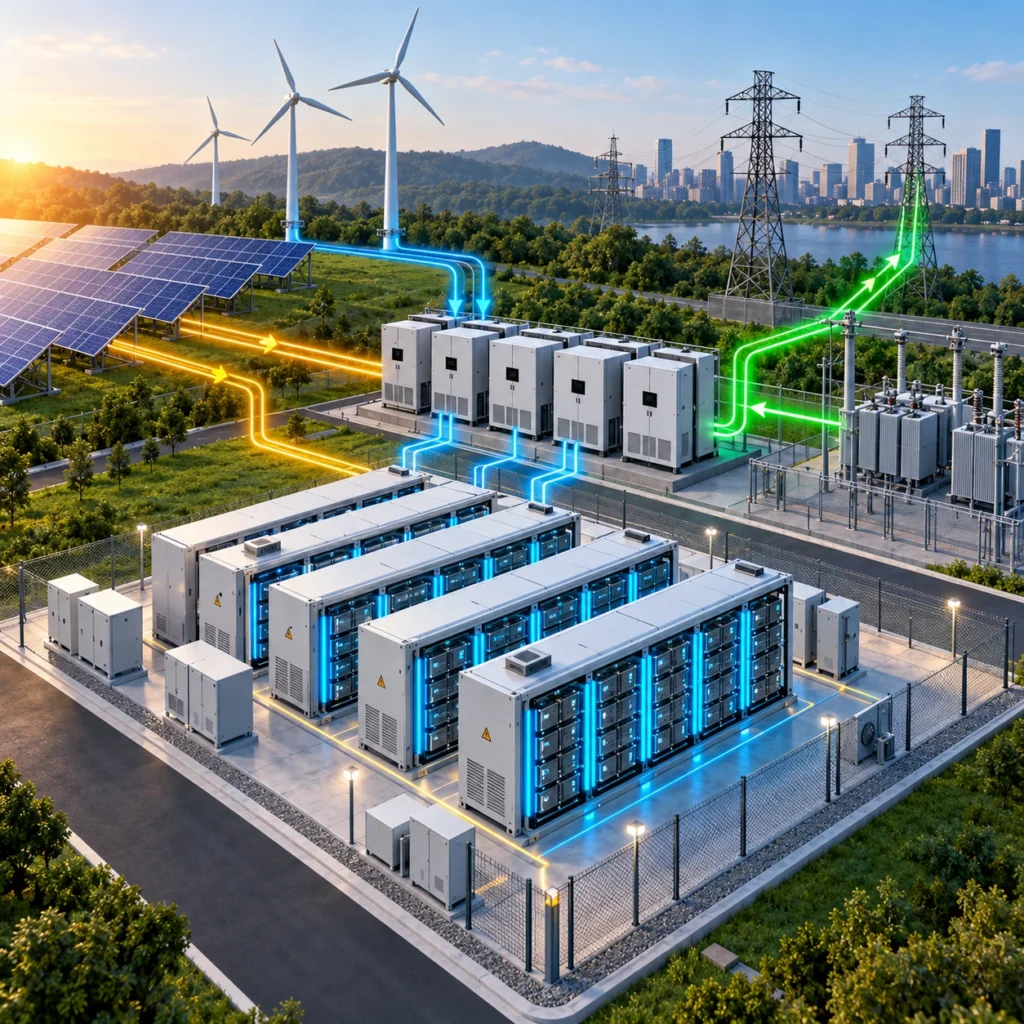
People often mix these two. Let us split them in a simple way.
Electrical energy storage keeps power as electric charge or motion. Batteries, pumped water, and spinning wheels are examples. Thermal energy storage keeps heat or cold.
| Feature | Thermal storage | Electrical storage |
|---|---|---|
| What it stores | Heat or cold | Electric power |
| Common tools | Water tanks, ice, hot sand, salt | Batteries, pumped water, air tanks |
| Best use | Heating, cooling, hot water | Lights, phones, cars, machines |
| Cost for long hours | Often lower | Often higher |
When Heat Is the Goal
Do you need heat or cold at the end? Then storing heat directly is smart. Each extra step can lose a little energy, so fewer steps help.
When Power Is the Goal
Do you need lights, phones, or a car? Then electrical energy storage like a battery is the better fit.
They Work Well Together
You do not have to pick one. A home can use a battery for power and a hot tank for heat. A smart plan uses both.
Long Term Energy Storage: Can Heat Last for Months?
Most storage lasts for hours or days. But long term energy storage aims to hold energy for weeks or months.
Why do we need this? The sun is strong in summer. But winter is when many places need the most heat.
Storing Summer Heat for Winter
Some cities dig big pits and fill them with hot water. A thick lid keeps the heat in. In winter, the water warms homes through pipes.
Underground Heat Storage
Other systems use deep holes in the ground. Pipes carry hot water down in summer. The ground around them stays warm and gives heat back later.
How Does It Compare?
Other options include pumped water and clean fuels like hydrogen. Each has costs and limits. Thermal energy storage is strong for heat because heat is what we need most in winter.
Why It Is Hard
Heat leaks, even through good walls. So big size and good insulation matter. A large store loses less heat compared to its size.
Thermal Energy Storage at Home
You may not need a big plant. Small steps work for homes too. Here are simple ideas.
Hot Water Tank
Pick a well-insulated tank. Set it to heat water when power is cheap. Ask your supplier about time-based rates.
Pair It With Solar or a Heat Pump
Solar panels make power at noon. A hot water tank can soak up that power as heat. A heat pump can fill the tank with less power.
Also read our guide on energy efficient homes.
Thick Walls and Floors Store Heat Too
A home with thick stone or concrete floors soaks up sun by day and gives heat back at night. This is a quiet form of thermal storage.
Ice Storage for Cooling
Some homes and small shops use ice tanks for cooling. These are less common, but they are growing.
Cost and Limits of a Thermal Energy Storage System
No tool is perfect. Let us be fair about the limits.
Upfront Cost
Tanks, insulation, and pipes cost money. A big thermal energy storage system also needs space. Prices vary by size, type, and place.
Heat Loss
Some heat leaks out over time. The longer you store, the more you lose. Good design reduces this loss.
Space
Water tanks and ice tanks take room. Rock beds and pits need even more. Small homes may have little space.
Fit for the Job
Storage works best when you need heat or cold. If you only need power for lights, electrical energy storage may suit you better.
Rules and Help
Some places give rebates or lower rates for storage. Rules change often. Check your local rules.
Results depend on your weather, prices, and building. Treat any savings figure as a guide.
How to Choose the Right Thermal Storage Option
Not sure where to start? Ask these simple questions.
- What do I need: heat, cold, or both?
- How long must it hold energy: hours, days, or months?
- How much space do I have?
- What is my budget?
- Who will install and care for it?
Then talk to two or three experts. Compare quotes line by line. Pick the one that fits your need, not just the lowest price.
For homes, a tank with a heat pump is a good start. For big sites, ask about ice, sand, or salt systems.
Easy Words You May Hear
- Charge: to fill the storage with heat or cold.
- Discharge: to take the heat or cold back out.
- Insulation: a layer that slows heat loss.
- PCM: a material that melts and freezes to hold energy.
- Grid: the network that brings power to homes.
- Heat pump: a machine that moves heat from one place to another.
Care and Safety Tips
A tank is simple, but it still needs care. Small checks keep it safe and strong.
Check Insulation
Look for wet or torn insulation. Fix it fast, since heat loss wastes money.
Watch for Leaks
Look for drips around pipes and valves. Call a pro if you see water on the floor.
Mind Hot Surfaces
Tanks and pipes can burn skin. Keep children away. Use warning labels.
Book a Yearly Check
Every thermal energy storage system needs a yearly check. A pro can test valves and pressure, like a car service.
Myths About Thermal Energy Storage
Let us clear up some wrong ideas.
Myth 1: “It Is Only for Big Power Plants”
Not true. Your home hot water tank is one already. Small and large systems use the same idea.
Myth 2: “Batteries Are Always Better”
No. For heat and cold, storing heat is often simpler and cheaper.
Myth 3: “Stored Heat Leaks Away Too Fast”
Not with good insulation. Many tanks hold heat for hours or days with small loss.
Myth 4: “It Is Old Technology”
The idea is old, but the tools are improving. New materials and designs keep appearing.
The Future of Thermal Energy Storage
More solar and wind power means more need for storage. So interest in heat storage is growing.
Cheaper Materials
Many teams test low-cost materials like sand, bricks, and waste rock. Cheaper materials can bring prices down.
Smarter Controls
Smart controls can charge a tank when power is cheap and clean. Apps will make this easier.
Bigger Networks
More cities may build large heat storage for homes. This can help long term energy storage goals.
Quick Tips to Get Started
- Check how old your hot water tank is.
- Ask your supplier about cheaper night rates.
- Add insulation to the tank and pipes.
- Pair a tank with solar or a heat pump.
- Talk to two experts before you buy a bigger thermal storage system.
Frequently Asked Questions (FAQ)
1. What is a thermal energy storage system?
It is a tool that stores heat or cold for later use. It can use water, ice, rock, sand, salt, or special materials. It gives the energy back when you need it.
2. How does thermal energy storage work?
It has three steps: charge, store, and discharge. Extra energy heats or cools a material. Later, the stored heat or cold is released for use.
3. What is the difference between thermal energy storage and electrical energy storage?
One holds heat or cold. The other holds electric power, like in a battery. Use heat storage for heating and cooling needs. Use a battery for lights and devices.
4. Can thermal storage work as long term energy storage?
Yes, in some cases. Big hot water pits and underground systems can hold heat from summer until winter. They need large size and good insulation.
5. Is thermal storage cheaper than batteries?
For heating and cooling, it is often cheaper, because water and sand cost little. But it depends on size, place, and need. Get local quotes.
Final Thoughts: Store Heat Today, Use It Tomorrow
You now know how a thermal energy storage system works. It saves heat or cold now and gives it back later.
You saw the three types, the five gains, and real uses. You also learned how electrical energy storage differs and why long term energy storage matters.
Start small. Check your hot water tank, ask about cheaper night rates, and add insulation. These are easy first steps with thermal storage.
Smart storage means lower bills and cleaner power. Take the first step today.
About Next Energy Hub: Next Energy Hub shares simple guides on energy storage, solar energy, heat pumps, and energy efficient homes. We use easy words so everyone can follow along. Have a question or an idea? Contact us any time.
