
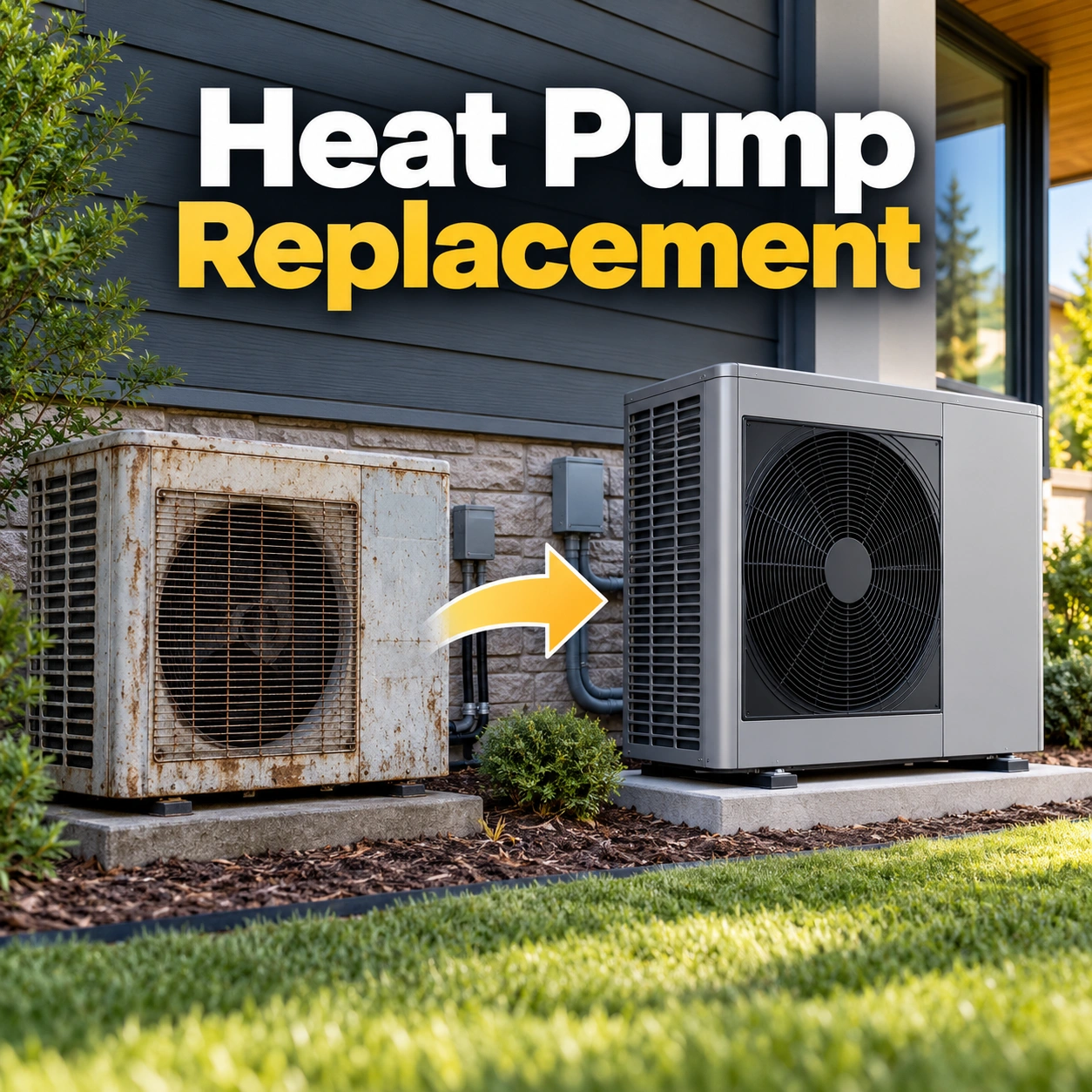

Do you have an old heat pump that is loud, weak, or always breaking? Are your power bills rising each month? Then it may be time for heat pump replacement.
A new unit can cut your bills and keep your home cozy all year. But the choice can feel big, and the prices can feel scary.
Here, you will find out when it is time to swap your unit. You will see the heat pump replacement cost in plain words. You will also see the cost to install heat pump systems, and the right way to install heat pump parts. We will cover geothermal heat pump replacement too.
Do not worry if English feels hard. We use short words and small steps. Let us begin!
Table of Contents
Heat Pump Replacement: The Simple Answer
Let us start with the basics. Heat pump replacement means taking out your old unit and putting in a new one.
It sounds simple, but a good job needs a plan. The right size, the right type, and the right crew all matter.
What Does a Heat Pump Do?
A heat pump does not make heat by burning fuel. It simply moves heat from one spot to another. That is why it often uses less power than old heaters.
When it is cold, it takes heat from the outside air and brings it indoors. When it is hot, it does the opposite. So one machine gives you warm air and cool air.
What Happens During a Replacement?
Here is the short path:
- A worker removes the old unit with care.
- They check the pipes, wires, and air ducts.
- They place the new unit.
- They test it and show you how to use it.
Good heat pump replacement may also include a new thermostat. An old one can hold back a new unit.
How Long Does It Take?
Most jobs take one to three days. A big job may take longer. For example, geothermal heat pump replacement may need digging, so it takes more time.
Signs You Need Heat Pump Replacement
Your unit will tell you when it is tired. Watch for these signs.
1. It Is Very Old
Air heat pumps often work well for around 10 to 15 years. If yours is near that age, start to plan. Do not wait for a full break.
2. Repair Bills Keep Growing
One small fix is fine. If you keep calling for repairs, you spend more and more money. Many owners then choose heat pump replacement instead.
3. Your Bills Go Up for No Reason
Old units lose power over time. They work hard but give less. So your bill rises, even if you use the same amount.
4. It Makes Strange Noises
Loud banging, grinding, or squealing is a bad sign. A healthy unit should be fairly quiet.
5. Rooms Feel Uneven
Some rooms are hot and some are cold. Or the air feels weak. The unit may not keep up.
6. It Runs Nonstop
A unit that never stops, or turns on and off fast, is in trouble. It is working too hard.
7. Thick Ice Stays on the Outdoor Part
A little frost in winter is normal. Thick ice that does not melt is not. Call a pro.
8. It Uses an Old Cooling Gas
Some old units use a gas that is slowly going away. Repairs may cost more each year. Ask your expert about this.
If you see two or three signs, call a pro soon. Early plans save stress and money.
Why Not Wait Until It Breaks?
Many people wait for a full break. That is risky. A sudden break often happens on the coldest or hottest day.
You Avoid a Rush
When you plan early, you can compare quotes in peace. In an emergency, you must pick fast. Fast choices can cost more.
You Get Better Choices
Crews are busy in extreme weather. Parts may run short. Waiting gives you time to choose the best unit for your home.
You Stay Comfortable
A planned job means no cold nights and no hot days without air. Your family stays safe and calm.
How Long Do Heat Pumps Last?
Most air units give about a decade or more of good service. Some run for 15 years. Some last longer with good care.
What Makes Them Wear Out?
Hard weather, dirty filters, and no yearly checks shorten their life. A unit that runs nonstop also wears faster.
How to Stretch Its Life
Clean the filters. Clear the outdoor part. Book a yearly check. These simple steps help you delay a big bill.
Geothermal Life Span
Geothermal indoor units often last 20 to 25 years. The buried pipes can keep working for many decades. That is why many owners see it as a long-term plan.
Repair or Replace? How to Decide
Not every problem needs a new unit. Use these easy rules before heat pump replacement.
The Half-Price Rule
When a repair costs over half of a new unit, a new one is the smarter pick. Many experts use this rule.
The Age Rule
If your unit is over 10 years old and needs a big repair, replace it. If it is under 8 years old, repair is often fine.
The Comfort Check
Is your home still uneven? Is the unit still loud? Then even a repair may not fix your comfort.
Think About Long-Term Savings
A new unit may use less power, so it can pay you back over time. Compare your yearly bills, not only the first price. Then weigh the heat pump replacement cost against those savings.
A Quick Checklist
- Is the unit over 10 years old?
- Are repairs coming often?
- Are bills rising?
- Is the home uneven or noisy?
Three “yes” answers mean you should start to plan. When in doubt, ask two experts. Their advice may differ, and that is fine. Compare the facts.
Heat Pump Replacement Cost: What Will You Pay?
Now for the big question. Heat pump replacement cost is not the same for every home.
In the United States, a common air heat pump job may cost from a few thousand dollars to over ten thousand. Big homes and special types cost more.
Prices change by place and by year. So use these numbers as a guide, not a promise. Always get real quotes.
What Changes the Price?
Here are the main things:
- Unit size
- Type of heat pump
- Brand and quality
- Condition of your ducts
- Worker pay in your area
- Extra work, like new wires
Size
A bigger home needs a bigger unit. A bigger unit costs more. But a unit that is too big is not smart. It wastes power.
Type
Air heat pumps cost less. Ground types cost more, but they may save more each month.
Efficiency
High-efficiency units cost more at first. They can save money later. Look for the SEER2 and HSPF2 labels. Higher numbers mean better use of power.
Ducts
Old ducts can leak air. That wastes power. Fixing them adds to the heat pump replacement cost, but it helps your new unit work well.
Where You Live
Worker pay and rules change by place. A big city may cost more than a small town.
Cost to Install Heat Pump Systems: Where Does the Money Go?
Many people ask about the cost to install heat pump units. It is not only the machine. The bill has many parts.
The Unit
This is the biggest part of the bill. A better unit costs more.
Labor
Workers need time and skill. Good work costs money. Bad work costs more later.
Materials
Pipes, wires, pads, and mounts all add up.
Permits and Checks
Many places need a permit. A check makes sure the job is safe.
Removing the Old Unit
The crew takes out your old unit and takes it away. This may have a small fee.
How to Compare Quotes
Ask each company to list every part of the price. Then compare line by line. A low quote with missing parts is not really low.
Before you install heat pump equipment, make sure each quote covers the same size and type. Then you can compare fairly.
Types of Heat Pumps: Which One Fits Your Home?
Before heat pump replacement, pick a type. Each one fits a different home and budget.
Air-Source Heat Pumps
These pull heat from outside air. They are the most common and cost the least. They work well in most places.
Ductless Mini-Split Heat Pumps
These have no big ducts. A small indoor unit hangs on the wall. They are great for homes with no ducts, or for one room.
Ground-Source (Geothermal) Heat Pumps
These use the steady heat of the ground. They cost more at first, but they use less power. We will look at them next.
Water-Source Heat Pumps
These use a pond or a well. They are not common, but they can work well in the right place.
Dual-Fuel Systems
These pair a heat pump with a gas furnace. The system picks the cheaper one. This helps in very cold places.
Geothermal Heat Pump Replacement: Is It Worth It?
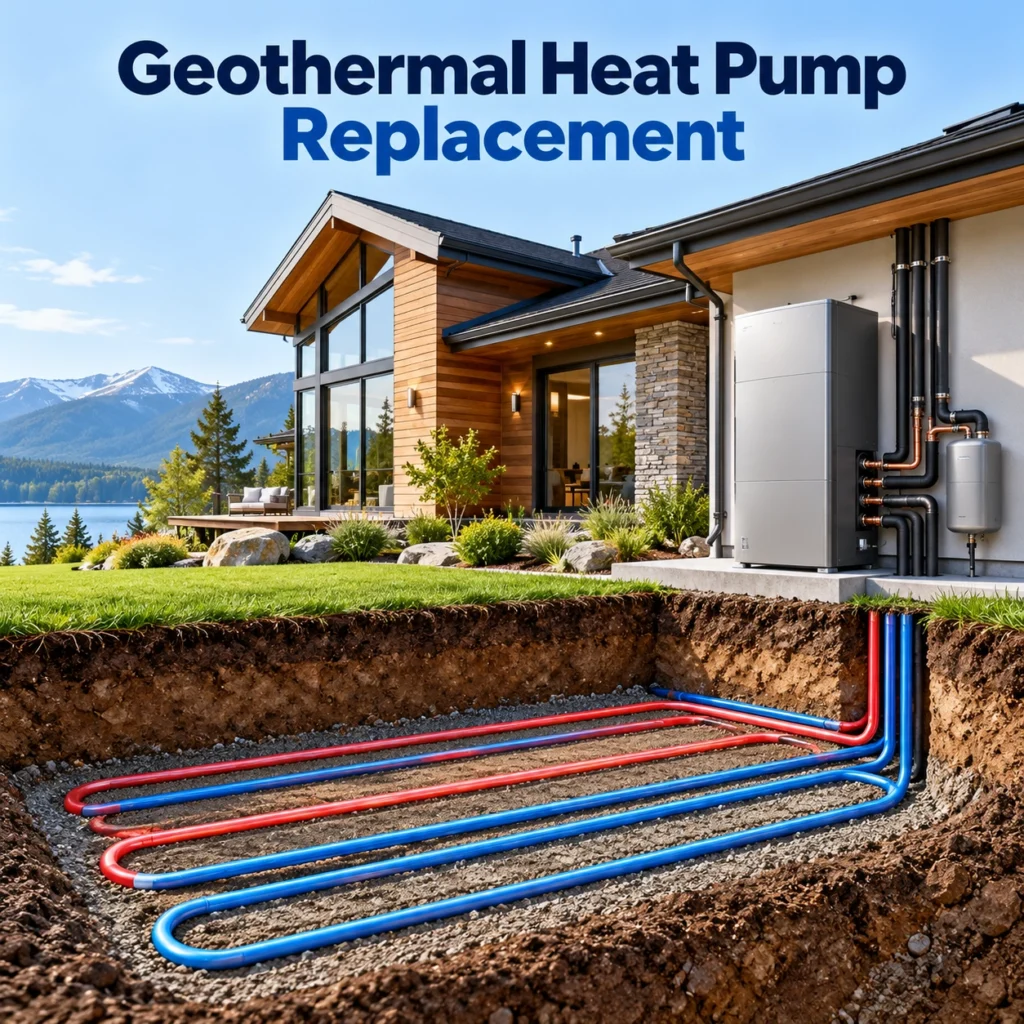
Geothermal heat pump replacement is a special case. These systems have two parts: the indoor unit and the ground loop.
The ground loop is a set of pipes buried in the earth. It can last 50 years or more. The indoor unit often lasts 20 to 25 years.
Often Only the Indoor Unit Changes
Good news! In many cases, geothermal heat pump replacement means changing only the indoor unit. The buried pipes stay. That saves a lot of money and digging.
Why the Price Is Higher
A geothermal unit costs more than an air unit. If you need new ground pipes, the price goes up a lot. Digging is hard work.
Why People Still Choose It
It uses less power each month. It is quiet. It also lasts long. For some homes, it pays back over many years.
Is It Right for You?
You need land or space for the loop. Soil and local rules matter too. Ask an expert to check your home before you plan geothermal heat pump replacement.
What Do You Get From a New Unit?
A new unit is more than a shiny box. Here is what heat pump replacement can give you.
Lower Bills
New units use power in a smarter way. Many homes see lower bills after the change.
Steady Comfort
New units hold the heat steady. Rooms feel even, and the air feels clean.
Quiet Work
New models are often much quieter than old ones. You may forget they are on.
Fewer Repairs
A new unit comes with a warranty. That means less worry for years. When you plan the heat pump replacement cost, add the repairs you will save.
Heat Pump vs Furnace and AC: A Quick Look
Some people wonder if they should switch to a heat pump. Here is a quick look.
Heat Pump
One machine heats and cools. It often uses less power. It works best in mild to cool places, and new models work in cold too.
Furnace and AC
A furnace gives heat. An AC gives cool air. You need two machines. They can work well, but may use more power or fuel.
Which Is Better?
It depends on your weather, your power prices, and your home. Ask an expert to compare real numbers for your case.
How Pros Install Heat Pump Systems: Step by Step
A heat pump is not a do-it-yourself job. It needs special tools and training. Here is how a good crew will install heat pump units.
Step 1: Check the Home
The crew visits your home. They measure rooms, check the ducts, and look at your old unit.
Step 2: Size the Unit
They use a size test called a load calculation. It shows how much heat your home needs. Do not skip it.
Step 3: Remove the Old Unit
The crew shuts off power and removes the old unit with care. They take out the old cooling gas the safe way.
Step 4: Set the New Unit
They place the outdoor part on a flat pad. They hang or place the indoor part. Then they connect pipes and wires.
Step 5: Seal and Test
They check for leaks, fill the system, and test it. A good crew also checks air flow.
Step 6: Set Up the Thermostat
They set the thermostat and teach you how to use it. Ask all your questions now.
Step 7: Final Check and Clean-Up
A final check makes sure all is safe. The crew cleans the work area and gives you papers and warranty cards.
For geothermal heat pump replacement, the steps may also include digging or loop checks. It takes more time.
How to Pick the Right Size
Size matters a lot. A unit that is too small cannot keep up. A unit that is too big turns on and off too fast. That wastes power and wears parts.
Do Not Guess
Ask for a load calculation. Do not accept a size based only on your old unit. Your home may have changed.
Think About Your Home
The size of your home, the sun, your windows, and your walls all change the need. So does your weather.
Ask for Numbers
A good expert will show you the numbers. If they cannot, find another expert. This step protects your money during heat pump replacement.
How to Choose a Good Installer
A great unit with poor work will fail. So choose your crew with care. Good work to install heat pump units matters as much as the unit itself.
Questions to Ask
- Are you licensed and insured?
- Have you done this kind of job many times?
- Do you do a load calculation?
- What does the warranty cover?
- Can I talk to a past client?
Check Proof
Read reviews. Ask for papers. A good crew is happy to show proof. If they hide things, walk away.
Get At Least Three Quotes
Prices can differ a lot. Do not pick only the lowest. Compare the unit, the work, and the warranty. A fair heat pump replacement cost comes with clear details.
Get It in Writing
Write down the unit, the price, the dates, and the warranty. This protects both sides.
Ways to Save Money on Your Project
Look for Rebates
Some places give rebates or tax help for efficient units. Rules change often. So check local rules before you buy.
Pick the Right Season
Crews may offer better prices in mild months. Plan ahead and you may save.
Seal and Insulate First
A tight home needs a smaller unit. A smaller unit costs less. Sealing gaps is cheap and works fast.
Do Not Cut Corners on Work
A low price with poor work costs more in the end. Pay for skill.
Ask About Warranty and Payment Plans
Some companies offer payment plans. Ask about the interest. Read the warranty. A strong warranty protects the cost to install heat pump systems that you pay for.
How to Care for Your New Heat Pump
Small habits keep your new unit strong.
Change Filters
Dirty filters block air. Check them every month or two.
Keep the Outdoor Part Clear
Remove leaves, snow, and weeds from around it. Give it space to breathe.
Book a Yearly Check
A yearly check finds small issues early. It can add years to the life of your unit.
Use Smart Settings
Do not change the thermostat by big jumps. Small changes work better.
Common Mistakes to Avoid
Even smart homeowners slip. Avoid these.
Picking Only on Price
The lowest quote is not always the best. A low price can hide poor work. Always compare the full heat pump replacement cost.
Skipping the Size Test
Guessing the size leads to waste. Always ask for a load calculation.
Ignoring the Ducts
A new unit with leaky ducts wastes power. Check the ducts during heat pump replacement.
Waiting Too Long
Waiting for a full break can force a rush choice. Plan early.
Forgetting the Warranty
Read the warranty. Know what it covers and for how long.
Choosing a Type Without Advice
Do not pick geothermal only because it sounds green. Ask an expert if geothermal heat pump replacement fits your land and budget.
A Simple Example
Let us look at a small story. A family has a 14-year-old heat pump. It is loud, and the bills keep climbing.
They call two crews for a load check. They learn their old unit was too big. So they choose a smaller, newer one.
They also seal the gaps in the attic. The crew explains each part of the cost to install heat pump units in writing.
After the job ends, the home feels even and quiet. The crew did a good job to install heat pump parts with care. Bills drop. The family says they should have planned earlier.
This is a made-up story, but it shows the path. Check, size, compare, and then act. Good heat pump replacement follows this order.
A Simple Timeline for Your Project
A plan makes the job feel small. Here is an easy path.
Week 1: Check and Learn
Note your unit’s age, noise, and bills. Read your warranty papers.
Week 2: Call for Quotes
Ask three crews for a visit and a load check.
Week 3: Compare and Choose
Read each quote line by line. Check reviews. Pick the crew you trust.
Week 4: Install and Learn
Let the crew do their work. Ask them to show you the filter, the thermostat, and the outdoor part.
Myths About Replacing a Heat Pump
Let us clear up some wrong ideas.
Myth 1: “Heat Pumps Do Not Work in Cold Weather”
Not always true. Many new models work well in the cold. Ask for a cold-weather model if you live in a cold place.
Myth 2: “A Bigger Unit Is Always Better”
No. A unit that is too big wastes power and wears out faster. Size it right.
Myth 3: “Replacing One Is Always Too Costly”
Not always. Smart choices and rebates can help. Savings on bills add up over time.
Myth 4: “I Can Install It Myself”
Not safe. The job needs tools, training, and often a license. Hire a pro.
Frequently Asked Questions (FAQ)
1. What is heat pump replacement?
It means removing your old heat pump and putting in a new one. The job includes sizing, setup, and testing. A good crew also checks your ducts and thermostat.
2. What is the average heat pump replacement cost?
It depends on size, type, and place. In the United States, many air heat pump jobs fall between a few thousand and over ten thousand dollars. So local quotes are the best guide.
3. What is the cost to install heat pump systems?
It covers the unit, labor, materials, and permits. The price grows if you need new ducts or wires. Ask each company for a full list of parts and work.
4. Is geothermal heat pump replacement more costly?
Yes, often. The unit costs more, and new ground pipes cost a lot. But many owners only need a new indoor unit, which costs less.
5. Can I install heat pump parts myself?
It is not a good idea. The work needs special tools, safe gas handling, and often a license. A pro should do it for your safety and your warranty.
Final Thoughts: Plan Early, Choose Well
You now know the big ideas. Watch for the signs. Compare a repair with heat pump replacement. Get clear quotes in writing.
You also learned the heat pump replacement cost and the cost to install heat pump units. You saw how a crew will install heat pump parts, and how geothermal heat pump replacement works.
Start small. Check your unit’s age, call two experts, and ask for a load test. Then pick a plan that fits your home and budget.
A good choice now means a cozy home and lower bills for years. Take the first step today.
